(: ily
i do photography and im looking to buy a really good/professional photography camera.
can anyone give me some suggestions && prices?
Answer
Professional cameras are top of the line DSLR designed for hundreds of thousand of activations and consistent day to day operations in all situations and conditions. Most people don't want or need a camera like that. Nor do they want the cost that goes with them
What you do want is a good quality Digital Single Lens Reflex camera. That will give you great color, clarity and quality photos. Both Canon and Nikon make great cameras and in truth it usually comes down to personal preference. So look at both, go and get them in hand to see which you like the feel of better and you'll not be wrong with either brand. Since you already have a Nikon SLR then getting another Nikon will let you use lenses and accessories you already have. You do not have to start from scratch
As to a recommendation IMHO Dollar for dollar there is no better entry level DSLR than the Nikon 40. Do not let the low megapixel count concern you. If you do not make very very large prints you will never notice it. It is easy and fun to use. It gives great quality pictures. I have both a D300 and a D40 and I often grab the D40 for family shots just because it is so fun to use and light. The D40 will let you grow as you learn more about cameras. Nikon makes a number of lenses for the camera as do third party lens manufacturers.
A great review on it can be found here
http://www.kenrockwell.com/nikon/d40.htm
If you can afford a little more the D60 give you a number of things you want. It has newer firmware and image processors, designed for the 10 mp sensor. It has an "Active Dust Reduction System with Airflow Control ". Nikon not putting a system on the D40 to deal with dust is one of the biggest drawbacks I see to the D40 ( though I think its still a great camera for the money) If you change lenses dust will get in and the camera needs a system to deal with it. With the D60 you get a VR lens. That will help with low light situations ( they may offer that now with the D40 but originally it was not) . The D60 has Adaptive Dynamic Range. Nikon calls it "Active D-Lighting," it lets you save some highlights that my otherwise be lost. It has a newer better metering system than the D40.
Some people will want to make a big issue out of the fact that there are some nikon lenses that will not autofocus on these cameras. Right now there are "only" about 39 lenses that autofocus on these cameras. They cover the range of focal lengths. I doubt any photographer would be seriously limited with "only" this many lenses to choose from. If you want to manually focus you can more than double this and do so at a low cost. Manual focusing is easy and how we did things for decades before the advent of autofocus.
Cannon and Nikon chose to put the vibration reduction in the lens rather than the body. Somefolks put it in the camera and make of that. Yes that means you get stabilization only on lenses with that feature built in. In the body in theory it would work on every lens. But in fact image stbilization in the lens has proved to work faster and smoother with a lower impact on focus times than image stabilization in the body
Professional cameras are top of the line DSLR designed for hundreds of thousand of activations and consistent day to day operations in all situations and conditions. Most people don't want or need a camera like that. Nor do they want the cost that goes with them
What you do want is a good quality Digital Single Lens Reflex camera. That will give you great color, clarity and quality photos. Both Canon and Nikon make great cameras and in truth it usually comes down to personal preference. So look at both, go and get them in hand to see which you like the feel of better and you'll not be wrong with either brand. Since you already have a Nikon SLR then getting another Nikon will let you use lenses and accessories you already have. You do not have to start from scratch
As to a recommendation IMHO Dollar for dollar there is no better entry level DSLR than the Nikon 40. Do not let the low megapixel count concern you. If you do not make very very large prints you will never notice it. It is easy and fun to use. It gives great quality pictures. I have both a D300 and a D40 and I often grab the D40 for family shots just because it is so fun to use and light. The D40 will let you grow as you learn more about cameras. Nikon makes a number of lenses for the camera as do third party lens manufacturers.
A great review on it can be found here
http://www.kenrockwell.com/nikon/d40.htm
If you can afford a little more the D60 give you a number of things you want. It has newer firmware and image processors, designed for the 10 mp sensor. It has an "Active Dust Reduction System with Airflow Control ". Nikon not putting a system on the D40 to deal with dust is one of the biggest drawbacks I see to the D40 ( though I think its still a great camera for the money) If you change lenses dust will get in and the camera needs a system to deal with it. With the D60 you get a VR lens. That will help with low light situations ( they may offer that now with the D40 but originally it was not) . The D60 has Adaptive Dynamic Range. Nikon calls it "Active D-Lighting," it lets you save some highlights that my otherwise be lost. It has a newer better metering system than the D40.
Some people will want to make a big issue out of the fact that there are some nikon lenses that will not autofocus on these cameras. Right now there are "only" about 39 lenses that autofocus on these cameras. They cover the range of focal lengths. I doubt any photographer would be seriously limited with "only" this many lenses to choose from. If you want to manually focus you can more than double this and do so at a low cost. Manual focusing is easy and how we did things for decades before the advent of autofocus.
Cannon and Nikon chose to put the vibration reduction in the lens rather than the body. Somefolks put it in the camera and make of that. Yes that means you get stabilization only on lenses with that feature built in. In the body in theory it would work on every lens. But in fact image stbilization in the lens has proved to work faster and smoother with a lower impact on focus times than image stabilization in the body
First professional camera?

Brooke
I'm an aspiring concert photographer, and I want to start taking more professional photographs. I've never bought a professional camera before, and I don't want to buy the wrong one and regret it. My price range is 200-500, I can't get anything truly expensive. PLEASE HELP ME!!
EDITED:
ok ok. not a professional camera! What kind of DSLR would you reccommend? Sorry for sounding completely naive, I've never bought a camera that was not p&S. any help is appreciated!
Answer
There's no such thing as a "professional camera" in the $200.00-$500.00 price range. A professional level camera, bare minimum, for just the body, no lens, you're looking at around $2,000.00.
For the price you're talking, you're looking at an entry-level camera. Stick to the proven manufacturers Nikon/Canon/Sony, etc., and you'll likely be happy. Each camera in the same price range from each of the proven manufacturers compete well with each other.
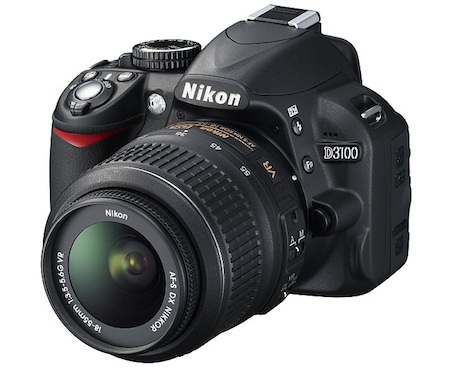
***EDIT: I'm assuming you want a dSLR, and not a hybrid type of camera. If so, for around the upper limit of what you're looking to spend, I'd recommend either the Sony A37, the Canon Rebel T3, or the Nikon D3100.
Each of those cameras are comparable in overall quality to each of the others - with each one having only very slight, but not significant, advantages and disadvantages in certain areas compared with the others. For example, if having the best quality video capabilities on your camera is important to you, the Sony has a slight edge over the others in that regard, but it also has a slight disadvantage compared to the others when it comes to high ISO shooting.
But, no matter which you decide on, if you're not happy with one of those cameras, you wouldn't be happy with any of the others either. Each camera from each manufacturer competes with each camera from each other manufacturer in the same price range. So, if you're not happy with one of those cameras, the only way to be happy would be to move up to a model in a higher price category, not simply to move to a different manufacturer's camera in the same price range.
The best thing you can do, really, is to visit a good camera shop and spend a little bit of time playing around with the different models. See which one feels the most comfortable in your hands, and which one's menu system seems the most intuitive to you.
There's no such thing as a "professional camera" in the $200.00-$500.00 price range. A professional level camera, bare minimum, for just the body, no lens, you're looking at around $2,000.00.
For the price you're talking, you're looking at an entry-level camera. Stick to the proven manufacturers Nikon/Canon/Sony, etc., and you'll likely be happy. Each camera in the same price range from each of the proven manufacturers compete well with each other.
***EDIT: I'm assuming you want a dSLR, and not a hybrid type of camera. If so, for around the upper limit of what you're looking to spend, I'd recommend either the Sony A37, the Canon Rebel T3, or the Nikon D3100.
Each of those cameras are comparable in overall quality to each of the others - with each one having only very slight, but not significant, advantages and disadvantages in certain areas compared with the others. For example, if having the best quality video capabilities on your camera is important to you, the Sony has a slight edge over the others in that regard, but it also has a slight disadvantage compared to the others when it comes to high ISO shooting.
But, no matter which you decide on, if you're not happy with one of those cameras, you wouldn't be happy with any of the others either. Each camera from each manufacturer competes with each camera from each other manufacturer in the same price range. So, if you're not happy with one of those cameras, the only way to be happy would be to move up to a model in a higher price category, not simply to move to a different manufacturer's camera in the same price range.
The best thing you can do, really, is to visit a good camera shop and spend a little bit of time playing around with the different models. See which one feels the most comfortable in your hands, and which one's menu system seems the most intuitive to you.
Powered by Yahoo! Answers